
Jo-Vin Window Treatment Specialists
Drapery Motor and Outlet Locations
Motorized drapery: will I see the motor? Here's everything you need to know to plan your installation correctly from the start.
Proper motor and outlet placement is one of the most critical, and most commonly overlooked, steps in specifying motorized drapery for guestrooms. Jo-Vin walks you through exactly what to plan for so your installation goes in cleanly, on schedule, and without costly surprises.
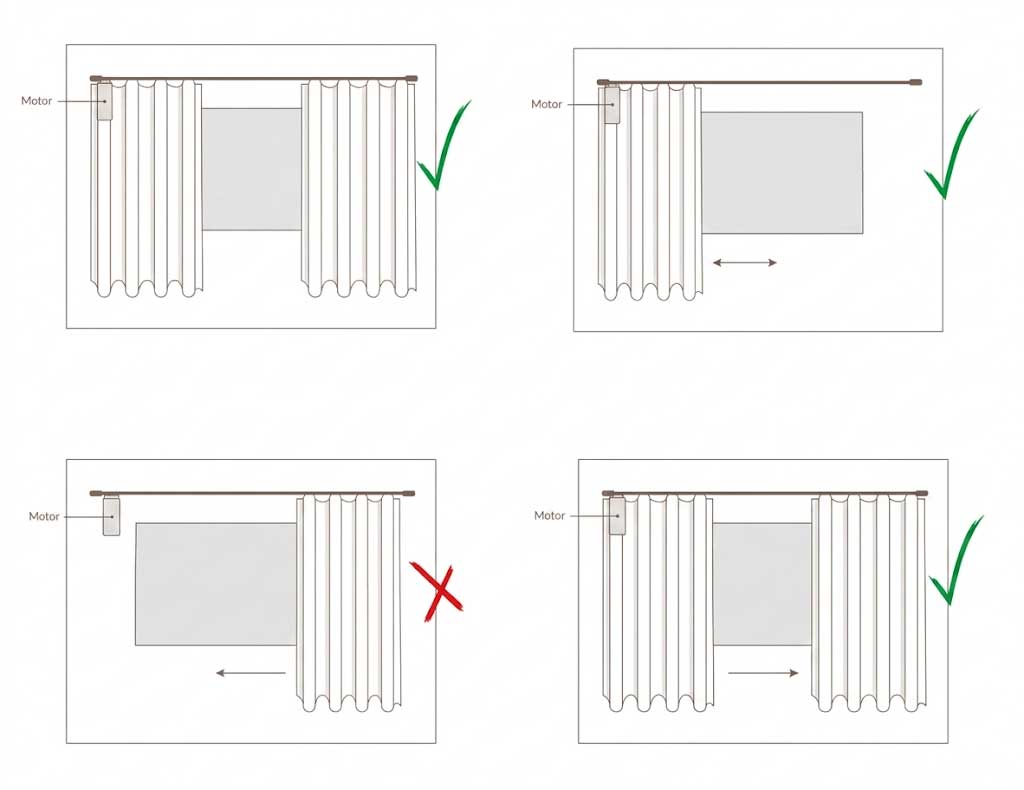
1. Hide the motor behind the drapery stack
The motor should always be positioned behind the drapery stack — the portion of the panel that bunches to the side when the drape is open. When planned correctly, the stack naturally conceals the motor from view at all times, whether the drape is open or closed.
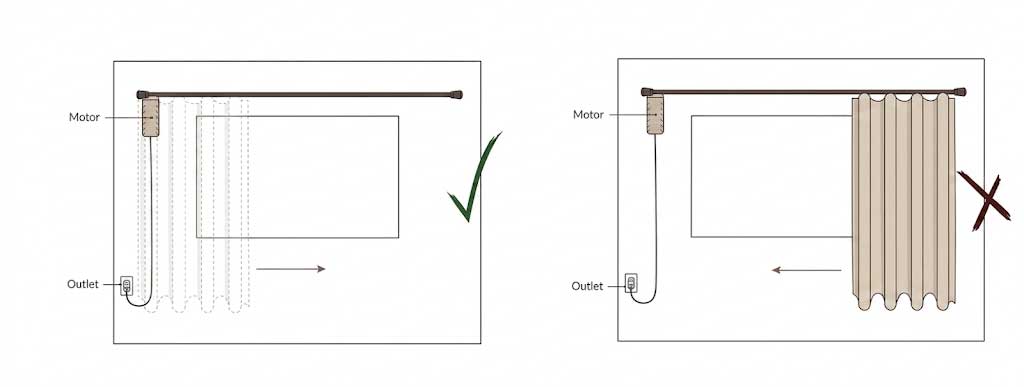
2. Hide the power wire behind the treatment
The wire powering the motor needs to be just as carefully concealed as the motor itself. Route the power wire so it runs behind the drapery panel from the motor to the outlet — never exposed along the wall or ceiling where guests can see it.
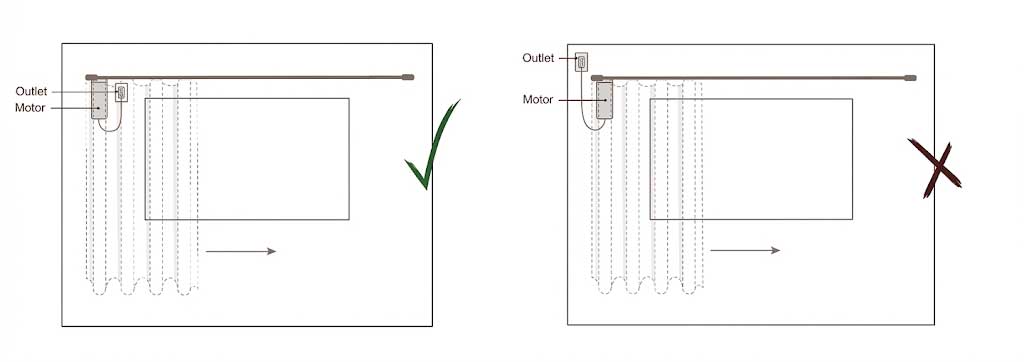
3. Obscure the outlet with a cornice, millwork, or top treatment
The outlet location itself also needs to be hidden. Plan for the outlet to sit above the drapery track in a position that will be covered by the top cornice, millwork pocket, or drapery heading. A visible outlet on the wall above the window undermines the finished look of any installation.
If electrical locations are limited, the motor can be positioned on either side of the drapery stack — but coverage by a pocket cornice or millwork enclosure is essential to keep it out of view.
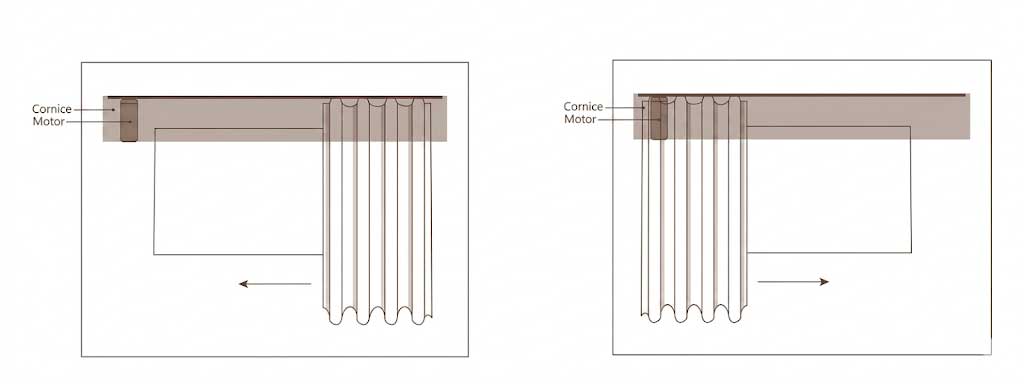
Will Any Top Treatment Work To Hide The Motor?
Drapery motors are typically around 12 inches in height. In most cases, any properly sized top treatment will cover the motor completely. Depending on your site design and conditions, Jo-Vin's custom-made cornices and valances will conceal the motor from a 90-degree view.