
Custom Window Treatments - New York
Roller Shade Fabric
Blackout, sheer, or basketweave — understand which fabric is right for your project
before you specify.
You're in good company




When to Use Which Type of Roller Shade Fabric
With roller shades gaining ground in the hospitality industry, both window treatment and textile manufacturers are expanding the range of roller shade-specific fabrics available in the market. That's good news — a broader fabric selection means more opportunity to nuance the design of a guest room or public space. Here we break down roller shade fabrics into the three main categories and offer guidance on where each one belongs.
Blackout Fabric
Sheer Fabric
Basketweave Fabric
Solar Fabric
Blackout Fabric
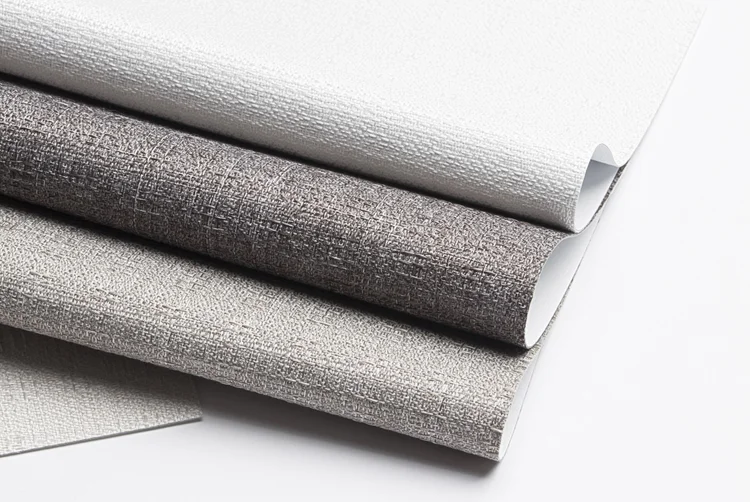
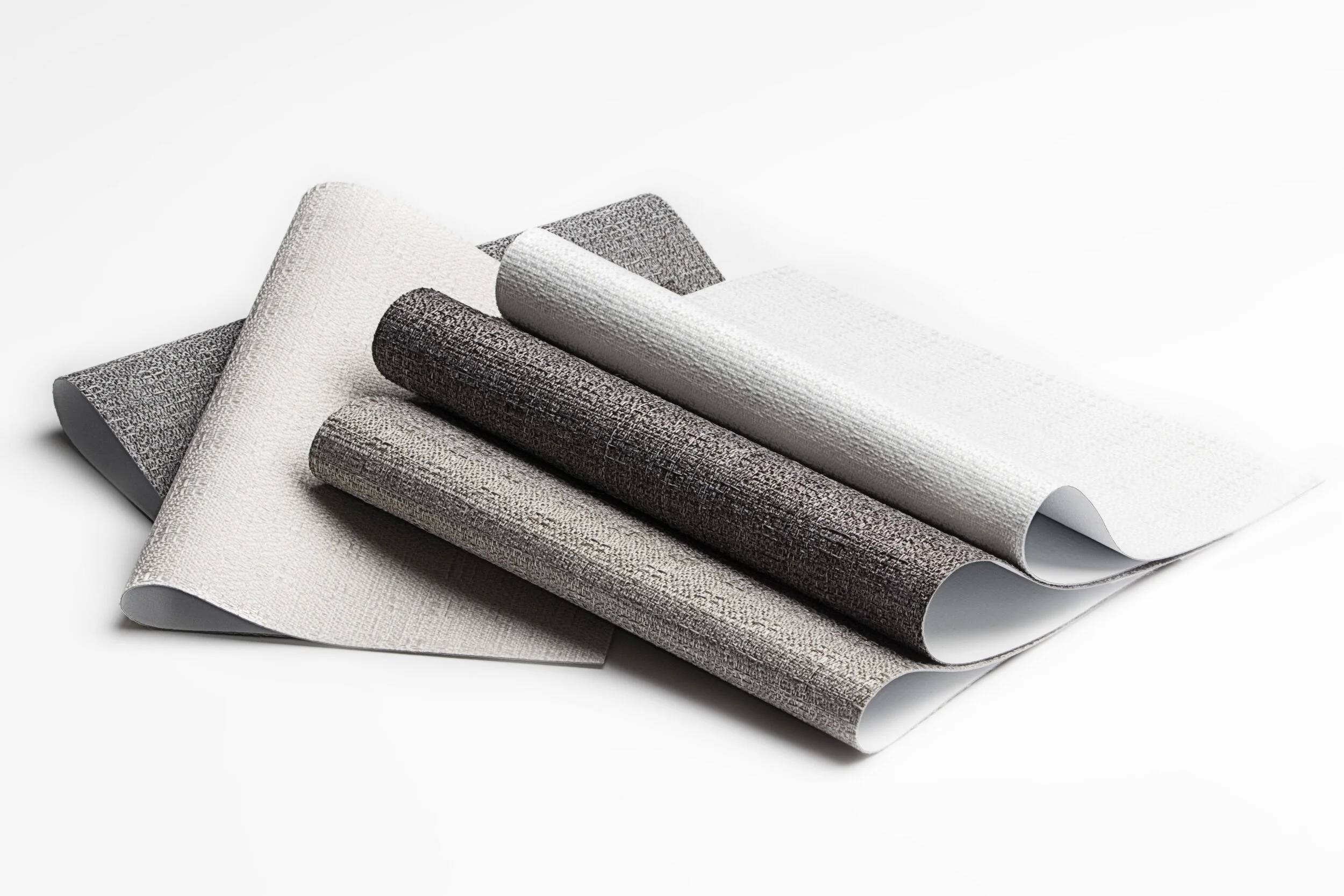
Light control is a non-negotiable in hospitality guest rooms. Whether a guest has arrived on an overnight flight, works night shifts, or simply wants to sleep in, the room needs to be capable of complete darkness at any hour. Blackout roller shade fabric is the primary tool for achieving that. Like blackout drapery fabrics, blackout shade fabrics are produced with a coating that is impenetrable to light.
It is important to note that blackout fabric alone does not guarantee a fully dark room. Blackout shades must always be paired with the appropriate accessories — side channels, L-tracks, or U-channels — to eliminate light bleed at the edges and sill. The fabric and the system work together.
Blackout roller shades are also worth considering as an alternative to blackout drapery in meeting rooms and boardrooms. The clean, minimal profile of a roller shade often complements a professional setting more naturally than a traversing drapery panel, while delivering the same light-blocking performance needed for presentations.
Sheer Fabric
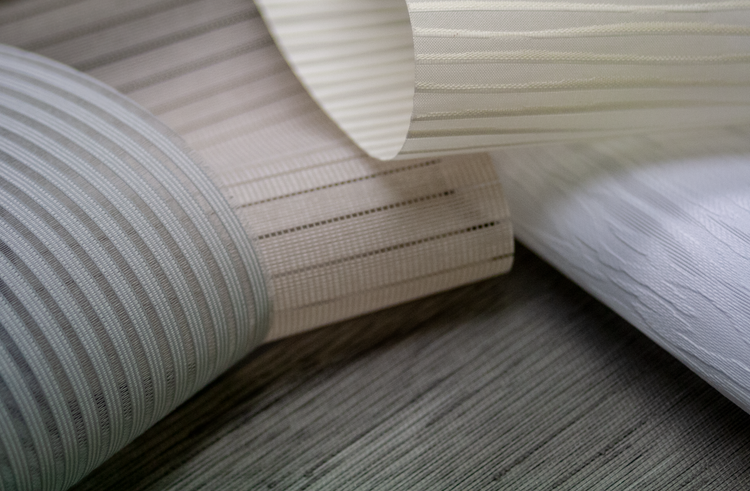
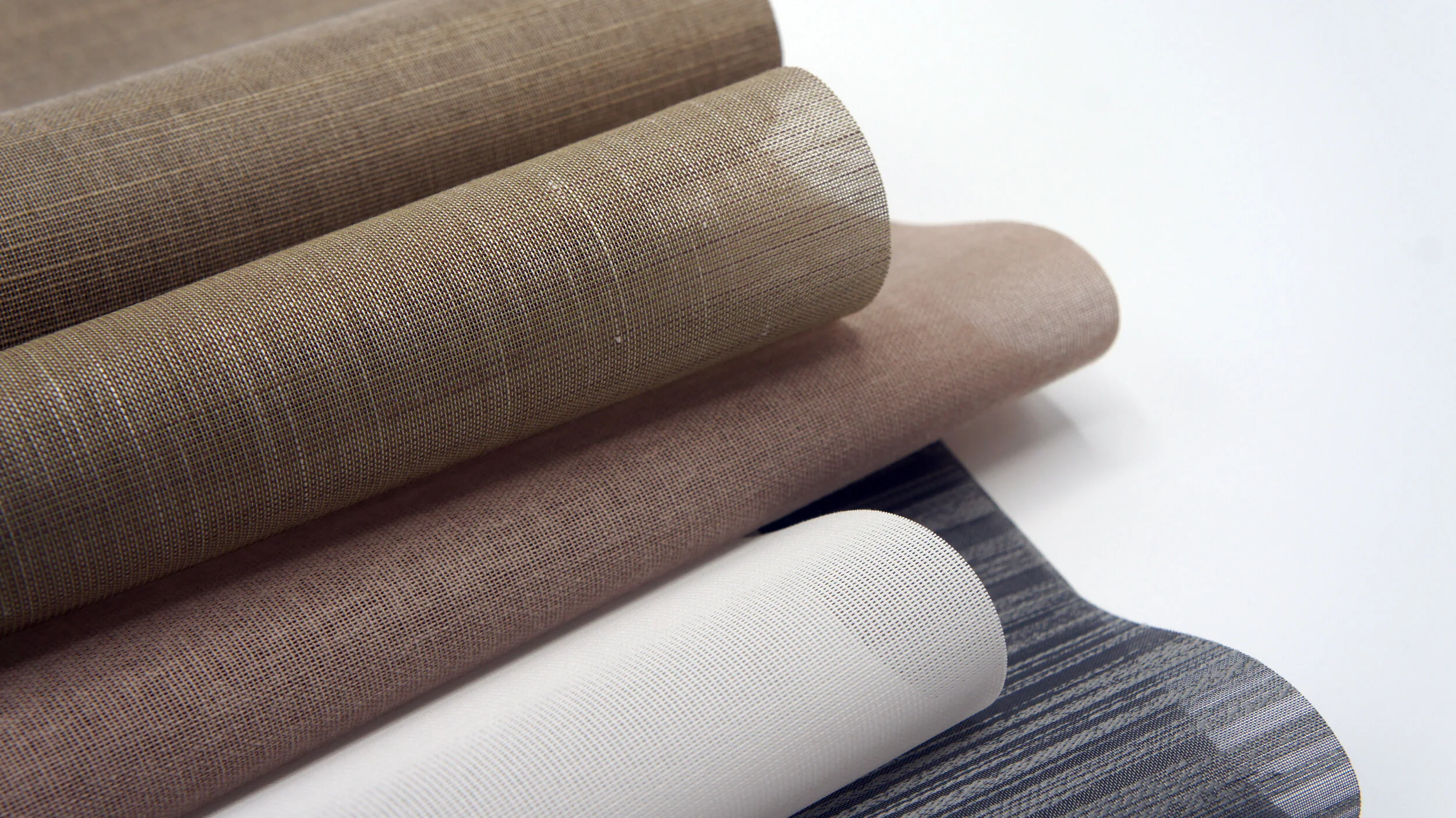
Sheer roller shade fabrics are, by definition, thin and semi-transparent. When a sheer shade is in the closed position, it will always allow significant light into the room. That is the nature of the material and the expectation should be set accordingly. What sheers offer in return is considerable — they are among the most visually appealing roller shade fabrics available, produced with complex weave patterns, a wide range of textures, and an aesthetic that reads as refined rather than functional.
In guest room settings, sheer roller shades are most effective when paired with a blackout shade in a dual configuration, or combined with a traversing blackout drapery panel. The sheer provides daytime privacy and diffused light; the blackout delivers full darkness when needed.
Sheer roller shades are an excellent choice for public spaces — lobbies, restaurants, bars, and fitness areas — where light fastness is not a requirement and the goal is to soften and filter natural light while preserving the view. They allow warmth and atmosphere into a room while cutting glare and solar heat gain.

Basketweave Fabric
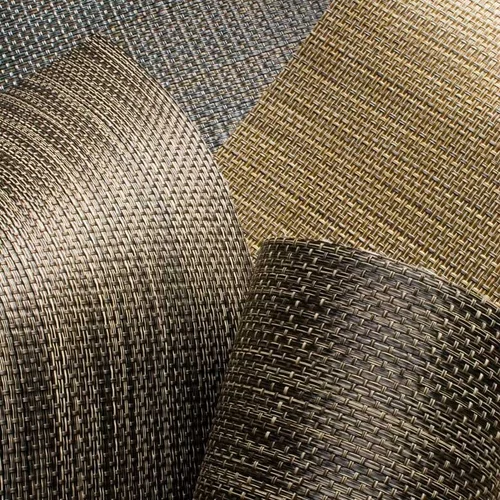
Basketweave fabrics occupy a category of their own. Produced with a traditional interwoven thread pattern that is visible to the eye, basketweave fabrics allow light through at varying degrees determined by the density of the weave. Manufacturers describe this characteristic using an openness factor — a fabric rated at 5% open allows less light through than one rated at 10% open.
We recommend treating openness ratings as a starting point, not a specification decision. The same 5% open fabric can read very differently depending on sun exposure, time of day, and weather conditions. A fabric that feels right in full sun may make a room uncomfortably dark on an overcast day. Always evaluate physical samples under the actual light conditions of the space before specifying.
Basketweave fabrics can serve as an alternative to sheer roller shades in guest rooms, but should never be considered a substitute for blackout fabrics. Their most natural application is in public spaces — lobbies, dining areas, bars, fitness rooms — where light filtration and texture are valued and complete darkness is not required.
Solar Fabric
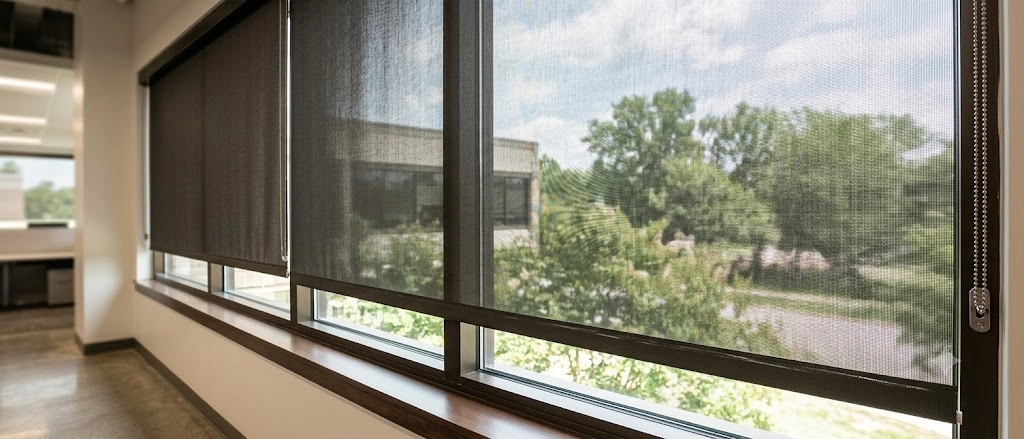
Solar roller shade fabric is a specialized category of basketweave, engineered specifically to manage solar energy rather than simply filter light. Like basketweave, solar fabric is produced with an openness factor that determines how much light passes through — but the construction and coating are optimized for a specific set of performance outcomes that standard basketweave fabrics do not reliably deliver.
Glare reduction without blackout. Solar fabric reduces incoming glare significantly without eliminating natural light. The tighter the weave, the more aggressively it cuts glare while a more open weave preserves more of the view and admits more light. Neither blocks light entirely — solar shades manage light rather than eliminate it, which makes them the right tool for workspaces, conference rooms, and any environment where occupants need to see screens comfortably without losing the benefit of natural light.
Daytime privacy with outward views intact. During daylight hours, solar fabric creates a one-way effect: people inside can see out clearly while people outside cannot see in. This is one of the most valued characteristics in commercial office environments and street-facing hospitality spaces. It is worth noting that this effect reverses at night when interior lighting is on — interior illumination negates the privacy benefit, which is a detail worth communicating to clients specifying solar shades for spaces used after dark.
UV protection and heat control. Solar fabric blocks a significant percentage of UV radiation regardless of openness factor, protecting furniture, flooring, and artwork from fading. It also reduces solar heat gain through the glass, lowering cooling loads and improving thermal comfort near large window areas. For spaces with southern or western exposures, this is a meaningful functional benefit that extends well beyond aesthetics.
Solar fabric is not a substitute for blackout. It will not produce darkness and should never be specified where light control is the primary requirement. Its application is defined by its strengths: glare management, UV protection, heat reduction, and view preservation in spaces that need to stay bright and functional throughout the day.