
Jo-Vin Window Treatment Specialists
Roller Shade Motorization Capabilities
Motorization is more accessible than ever. Here's a breakdown of every power option Jo-Vin offers for roller shades — so you can choose the right fit for your project from the start.
Motorized roller shades have become a standard expectation in commercial hospitality environments — and with good reason. Jo-Vin offers three power options to fit the specific needs of any project, whether you're working with new construction, a renovation, or a retrofit. Understanding each option will help you specify the right solution from the start.
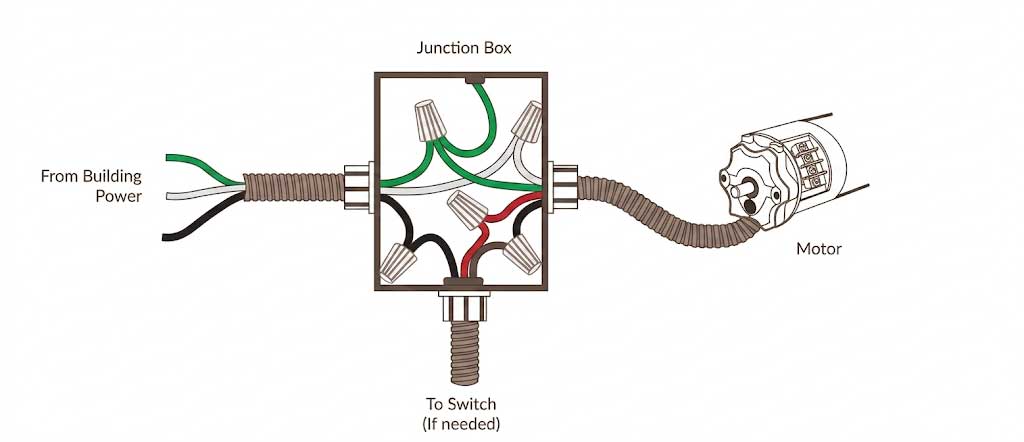
Hardwired
Hardwired motors are permanently connected to the building's electrical system, making them the most reliable and seamless long-term solution for commercial installations. Power is always available — no charging, no cords to manage, no batteries to replace.
This option is ideal for new construction or gut renovation projects where electrical can be planned and roughed in before installation. A licensed electrician is required to complete the connection.
Best for: New construction, full renovations, projects where outlet placement can be planned in advance.
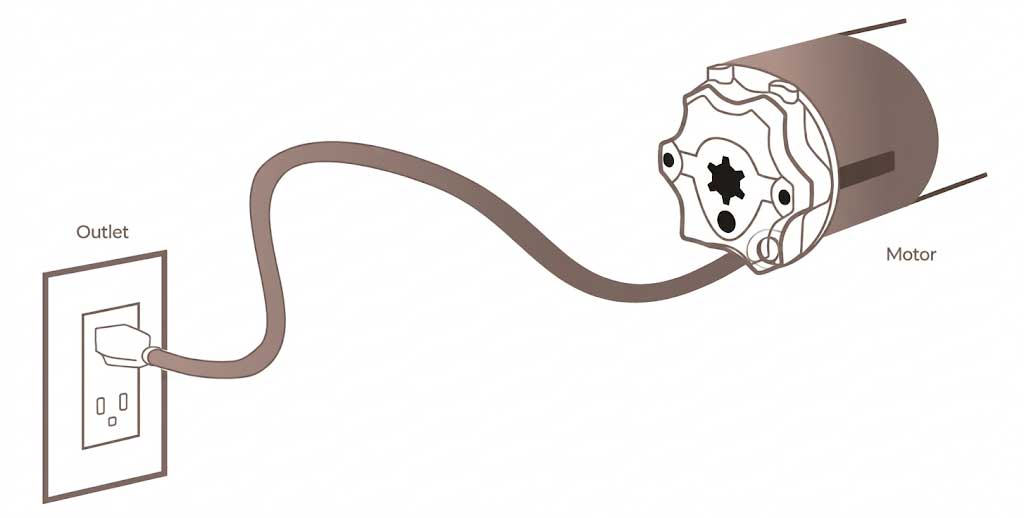
Plug & Play
Plug & Play motors connect to a standard electrical outlet, making them an excellent option for retrofit projects where hardwiring isn't feasible. Installation is straightforward — no electrician required for the motor connection itself — and the system performs with the same reliability as a hardwired setup.
The power cord and outlet should be concealed behind the shade's fascia or within a millwork pocket for a clean finished appearance. Proper outlet placement planning is essential.
Best for: Retrofit projects, renovations with existing accessible outlets, installations where hardwiring is not practical.
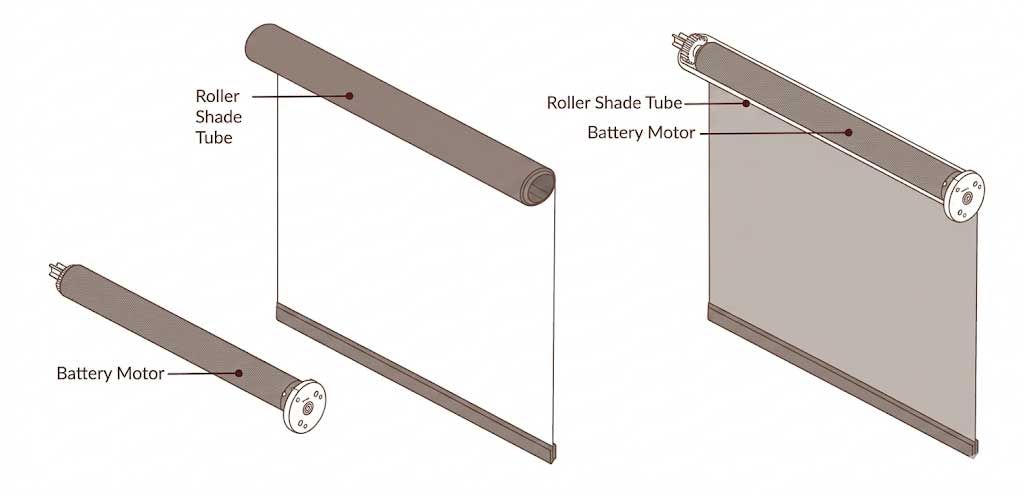
Battery
Battery-powered motors offer the ultimate flexibility — no electrical connection required whatsoever. This makes them the go-to solution for spaces where running power to the window is cost-prohibitive or structurally impractical, such as historic properties, occupied renovations, or installations with limited wall access.
Batteries are rechargeable and typically last several months between charges depending on usage frequency. A routine maintenance plan should account for recharging cycles.
Best for: Historic properties, occupied renovations, spaces with no accessible power source, projects requiring maximum installation flexibility.